Project64 – Free Nintendo 64 Emulator for Windows
Project64 brings your favourite Nintendo 64 games to your Windows PC as a free, open-source N64 emulator. Play classic titles with customisable controls, adjustable graphics, save states and fullscreen support, whether you are returning to games you enjoyed years ago or discovering the Nintendo 64 for the first time.
- For Windows
- Fast and stable
- Feature-rich
- Open source
What Is Project64?
Project64 is a Nintendo 64 emulator developed for Windows computers. It allows you to run compatible N64 games without needing the original console.
Instead of connecting a Nintendo 64 to your television, you can open supported game files directly on your PC. Written in C++, Project64 is free and open-source software that supports Nintendo 64 and Nintendo 64 Disk Drive emulation.
Project64 includes useful features such as controller configuration, save states, fullscreen gaming and support for different graphics and audio plugins. It is particularly popular among people who want to revisit their childhood favourites.
From colourful platform adventures to racing games and multiplayer classics, Project64 makes it possible to enjoy much of the Nintendo 64 library using modern computer hardware.
- Written in C++
- GPL-2.0 licence
- N64 & 64DD support
How Does Project64 Work?
Project64 works by emulating the hardware and software environment of the original Nintendo 64 console. It processes compatible game files and reproduces their graphics, sound and controls on a Windows computer.
Install Project64
Download the appropriate Project64 installer for Windows and follow the installation instructions. Once installed, open the programme to access its main interface.
Load Your N64 Games
Open a compatible Nintendo 64 game file through the emulator’s File menu. Use game files you are legally entitled to use.
Configure Your Controls
Choose between keyboard controls and a compatible game controller, then assign buttons according to your preferences.
Start Playing
Begin playing and, depending on the game and your settings, use save states, fullscreen mode and graphics options.
Key Features of Project64
Project64 includes several features that make Nintendo 64 gaming more convenient on a computer. Alongside basic emulation, it offers options for changing how games look, sound and respond to your controls.
High-Resolution Graphics
Display supported games at higher resolutions through compatible graphics plugins, adjusted to your computer’s capabilities and the game you are running.
Customisable Controller Support
Use keyboard input or a variety of PC-compatible gamepads, including an original N64 controller through a suitable adaptor, with flexible button mapping.
Save and Load Game States
Capture your progress during gameplay and return to that point later, alongside normal in-game saving in supported titles.
Fullscreen Gaming
Switch from windowed mode to fullscreen for a more immersive experience without the distraction of other windows.
Graphics and Audio Plugins
A plugin-based system lets you change how graphics, sound and controller input are handled to address problems in particular games.
Nintendo 64 and 64DD Support
Emulates Nintendo 64 games and includes support for the Nintendo 64 Disk Drive, with compatibility varying between games and versions.
Free and Open-Source Software
Available without a purchase fee, with publicly accessible source code that contributors can examine, report issues on and help improve.
 Plugins, save states and fullscreen in one emulator
Project64 Source Code Download
Looking for a convenient way to play Nintendo 64 games on your computer? Project64 can be downloaded for free and installed on a compatible Windows system.
- Software Name
- Project64
- Software Category
- Nintendo 64 Emulator
- Operating System
- Windows
- Supported Consoles
- Nintendo 64 and Nintendo 64DD
- Programming Language
- C++
- Licence
- GPL-2.0
- Cost
- Free
- Controller Support
- Yes
- Save States
- Supported
- Source Code
- Available on GitHub
Development source code ZIP from the Project64 GitHub repository. This is not a Windows installer; games are not included.
Choose a stable public release if you want a version intended for everyday use. Development builds may include newer changes, but they can also be less thoroughly tested.
For a reliable installation, obtain the software from the official Project64 download page or its recognised GitHub repository. The emulator itself does not include commercial Nintendo 64 games.
How to Install and Set Up Project64
Installing Project64 is straightforward, even if you have never used a console emulator before. Follow these steps to prepare the software and run your first compatible game.
- Step 1
Get a Windows Release
For everyday play, get a compiled Windows release from the official Project64 website. The source ZIP available above is for building the program, not installing it.
- Step 2
Install Project64
Run a verified Windows installer from the official release channel and follow its prompts. Do not try to run the development source ZIP as an installer.
- Step 3
Open the Emulator
Launch Project64 from your desktop or Start menu. The main window gives you access to the options needed to open games and configure the emulator.
- Step 4
Configure Your Controller
Connect a compatible gamepad or use your keyboard. Open the controller configuration settings and assign the buttons you want to use.
- Step 5
Load a Nintendo 64 Game
Select the option to open a game file, locate a compatible N64 game on your computer and load it into Project64.
- Step 6
Adjust Your Settings
If necessary, change the graphics resolution, audio configuration or controller settings. You can also enable fullscreen mode once the game is running.
Your emulator is now ready to use. If a particular game does not run correctly, try adjusting its settings or checking the available compatibility guidance.
Project64 System Requirements
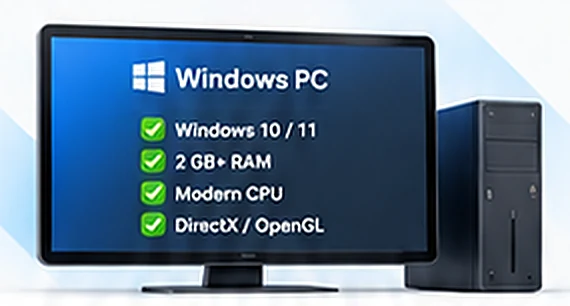
Project64 does not necessarily require an expensive gaming PC. However, performance depends on your processor, graphics hardware, selected plugins and the game you want to play.
| Component | Requirement |
|---|---|
| Operating System | 64-bit Windows 10 or Windows 11 |
| Processor | Intel or AMD, 1 GHz or faster, with SSE2 support |
| RAM | 2 GB or more |
| Graphics | Compatible DirectX 8, OpenGL 3.3 or Vulkan 1.1 hardware, depending on the plugin |
| Input | Keyboard or compatible game controller |
| Storage | Space for the emulator and your own game files |
The requirements above are listed in the Project64 development documentation. A more capable computer may provide better results with demanding graphics plugins, and some integrated graphics devices can experience compatibility problems even when they meet the stated requirements.
Keeping Windows and your graphics drivers updated can also help avoid common performance issues.
Why Choose Project64 for Nintendo 64 Games?
There are several ways to revisit Nintendo 64 games, but Project64 offers practical features for people who prefer playing on a Windows computer.
Convenience is one of its biggest advantages. You can keep your compatible games organised on your PC, use a familiar controller and choose whether to play in a window or fullscreen.
Project64 also gives you more control over the experience. You can experiment with graphics options, change button assignments and save your progress using save states. If a game experiences visual or audio problems, you may be able to improve the results by changing the relevant plugin or configuration.
For players who enjoy classic Nintendo 64 games but no longer use the original console regularly, Project64 provides a flexible alternative.

Organised LibraryKeep your games on your PC
More ControlGraphics and button options
Plugin SupportSwap plugins for better results
Flexible AlternativeNo original console needed
Project64 Graphics and Controller Settings
Getting the controls and graphics right can make a noticeable difference to your gaming experience. The settings available depend on the emulator version and plugins installed.
Adjust Your Graphics Resolution
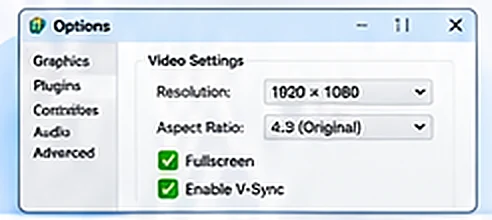
Higher resolutions may make supported games appear sharper, while lower settings help on less powerful computers. Increasing the resolution will not automatically improve every original game texture.
Choose a Suitable Graphics Plugin
GLideN64 is one commonly used option, while other plugins may suit particular hardware or games. Missing textures, flickering or unusual effects may improve with another supported plugin.
Configure Keyboard and Gamepad Controls
Select the controller you want to use, assign the Nintendo 64 buttons to keys or gamepad buttons and test movement, camera controls and action buttons in a game.
Set Up Fullscreen Display
Select a display resolution that suits your monitor and consider preserving the original game’s aspect ratio to avoid stretched visuals.
Once your settings are configured, you can concentrate on playing rather than adjusting the emulator each time.
Common Project64 Problems and How to Fix Them
Most Project64 sessions are straightforward, but some games may display errors or behave unexpectedly. These issues can often be traced to graphics settings, controllers, game files or outdated software.
Project64 Is Running Slowly
Reduce the internal rendering resolution or use a less demanding graphics plugin. Close unnecessary programmes and check that your computer meets the requirements.
A Game Shows a Black Screen
Try another supported graphics plugin, check the game file and make sure you are using a suitable Project64 release.
The Controller Is Not Working
Confirm that Windows recognises your controller, then check the selected device and button assignments in the input settings. Reconnect it if necessary.
Audio Is Crackling or Delayed
Review your audio configuration, check overall performance and test a different supported audio plugin if available.
A Game Will Not Load
Make sure the file is a supported, uncorrupted Nintendo 64 game image. Some games need specific compatibility settings, while others may not work correctly.
For persistent issues, consult the Project64 support documentation and check whether other users have reported the same behaviour.
Frequently Asked Questions About Project64
Find quick answers to common questions about Project64, from downloads and safety to controllers, settings and older versions.

Yes. Project64 is free software, and its source code is publicly available. You can download a public release without purchasing the emulator. Nintendo 64 games are separate and are not included with the software.
Project64 is a legitimate emulator, but download safety depends on where you obtain the installation file. Use the official project website or recognised GitHub repository, and avoid unfamiliar download pages that bundle additional software.
Yes. Project64’s documented supported requirements include 64-bit Windows 11 and Windows 10. Performance still depends on your computer’s hardware, graphics drivers and selected emulator settings.
No. Project64 is an emulator rather than a game collection. You need to provide your own compatible game files and ensure that you have the necessary rights to use them.
Project64’s main supported desktop platform is Windows. Native support for other operating systems is not currently part of its standard supported desktop release. Users of Mac or Linux may need to consider other emulators.
The public source code is hosted at github.com/project64/project64. The repository also contains issue reports, pull requests and development activity that anyone can read.
Public references mention Android in the project’s history, but the standard supported release targets Windows and mobile availability changes over time. Avoid APK files from unknown websites.
Project64 3.0.1 is listed in public references as a stable release published in July 2021. It belongs to the 3.0 series, which offers plugin choice, save states, controller mapping and fullscreen play.
Project64 Legacy is a separate open-source project that continued the original 1.6 source code with fixes and updated plugins. It is distributed as a portable archive, and its team described the 1.6.3 and 1.6.4 releases as final.
Copies of version 1.6 still circulate, but the original builds are no longer maintained and old download sites can be risky. Current Project64 or Project64 Legacy are safer starting points for most players.
Yes. Project64 supports compatible PC controllers as well as keyboard input. You can configure button assignments through the input settings. Original Nintendo 64 controllers may also work when connected through a suitable USB adaptor.
Not necessarily. Project64 supports many Nintendo 64 games, but compatibility is not perfect. Some titles may have visual issues, audio problems or other limitations, while others may require particular plugins or settings.
Open Project64 and use the File menu to select a compatible Nintendo 64 game file stored on your computer. You can also organise your own game files in a dedicated folder for easier access.
Yes. Save states allow you to record the current point in a game and restore it later. This can be helpful when replaying difficult sections or when you need to stop playing before reaching a normal save point.
Yes. You can play supported Nintendo 64 games using a keyboard. Project64 allows you to assign console buttons to keyboard keys, although some games may feel more comfortable with a gamepad.
Archive-based builds can run from an extracted folder, keeping settings and saves together. Project64 Legacy is distributed in a portable format, while other releases may be offered mainly as installers.
Install Git for Windows and run git clone https://github.com/project64/project64.git in the folder where you want the source code. Compiling is optional and mainly useful for developers.
A black screen often points to a graphics plugin problem or an incompatible game file. Try another supported video plugin, update your graphics drivers and check that the game file is not corrupted.
GLideN64 is a commonly used choice, but no single plugin suits every game. Start with the default plugin and test alternatives when a title shows missing textures or flickering.
Slow performance usually comes from a high internal resolution or a demanding plugin. Lower the resolution, close unnecessary programs and confirm that your computer meets the emulator’s requirements.